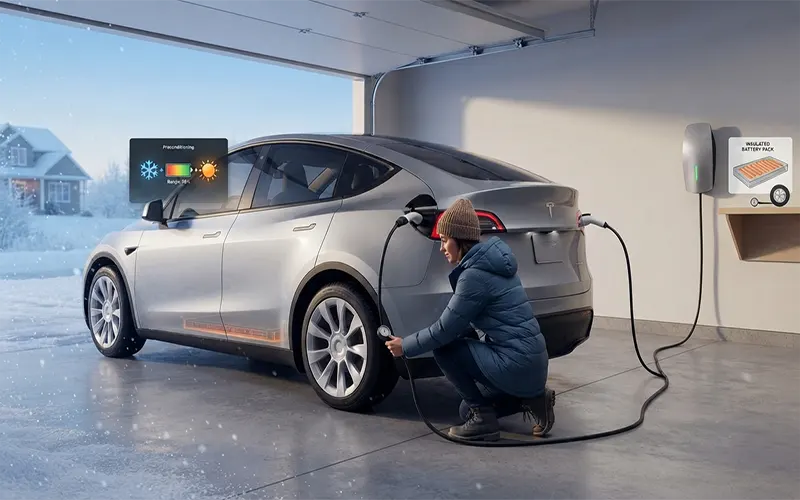
Sliding behind the wheel of an electric vehicle (EV) on a crisp winter morning can bring an unwelcome surprise. When freezing temperatures take over, drivers often notice their digital range estimates plummeting unexpectedly. Freezing conditions can temporarily slash driving range by 20% to 40%, forcing drivers to rethink their daily routines.
Understanding the science behind this winter dip—and mastering proactive charging habits, smart pre-conditioning routines, and efficient climate settings—allows you to reclaim your lost range and keep your EV running efficiently all season long.
The Science of Cold: Why Batteries Lose Range in Winter
To combat winter range loss effectively, it helps to understand what is happening inside the vehicle. Lithium-ion batteries rely on electrochemical reactions to store and release energy. When temperatures drop, internal electrical resistance increases significantly, slowing down those chemical reactions and temporarily reducing the battery pack’s available power output and capacity.
Compounding this chemistry issue is the heavy energy draw of cabin heating. Unlike traditional internal combustion engines that generate abundant waste heat to warm the cabin for free, EVs must power resistive heaters or high-efficiency heat pumps directly from the main high-voltage battery pack. Powering both the cabin heater and the internal thermal management system creates a double drain on your available mileage.
Proactive Winter Habits: Pre-Conditioning and Garage Parking
The single most effective weapon against winter range loss is pre-conditioning your vehicle.
- The Power of Pre-Conditioning: Most modern EVs allow you to program a departure time or trigger a remote command via a smartphone app to warm up both the cabin and the battery pack while the car is still plugged into your home charger. By pre-heating using electricity straight from the household grid rather than your battery pack, you step into a cozy, fully defrosted car with 100% of your driving range intact.
- Thermal Management via Location: Whenever possible, parking your EV inside a garage overnight keeps the vehicle insulated from extreme sub-zero wind chills, preserving a higher baseline battery temperature and reducing the energy required for morning warm-ups.
Smart Driving and Charging Strategies in Freezing Temperatures
Optimizing how you drive and manage your battery during freezing months yields immediate efficiency gains:
- Prioritize Surface Heaters Over Full HVAC: Blasting the main climate control system to high heat drains power rapidly. Instead, rely primarily on heated seats and heated steering wheels. These localized elements use a fraction of the energy while keeping you comfortably warm.
- Maintain Proper Tire Pressure: Cold winter air causes tire pressure to drop steadily, which increases rolling resistance and forces the motor to work harder. Check your tire pressures monthly and inflate them to the manufacturer’s recommended specifications.
- Charge Immediately After Driving: Plug your EV in right after returning home while the battery pack is still warm from operation. A warm battery accepts a charge much faster and more efficiently than a “cold-soaked” battery left unplugged in the freezing night air.
Managing Expectations: Cold Weather Range Realities
It is important to remember that winter range loss is a temporary physical phenomenon, not permanent battery degradation. Once spring temperatures return—or once the battery warms up thoroughly during a long drive—its normal capacity and performance levels bounce right back. Maintaining realistic expectations, allowing a slightly higher state-of-charge buffer for your daily commute, and factoring in minor charging adjustments will completely eliminate winter range anxiety.
Winter weather presents unique challenges for electric vehicle owners, but it certainly shouldn’t sideline your driving plans. By embracing smart pre-conditioning habits, leveraging targeted seat heating, and maintaining optimal tire pressures, your electric vehicle will remain an efficient, reliable, and comfortable companion all winter long.