
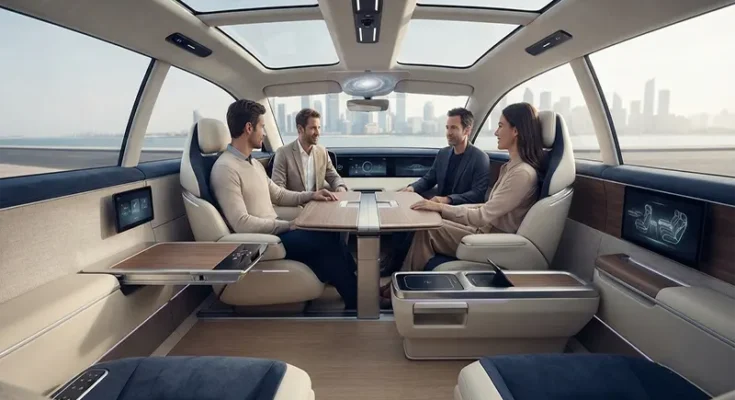
Rotating Seats and Modular Living Spaces in Autonomous Luxury Car Interior Concepts

Rotating Seats and Modular Living Spaces in Autonomous Luxury Car Interior Concepts

For over a century, the interior architecture of the automobile has been bound by a single rigid constraint: the human driver. Every seat, dash panel, and control surface was meticulously arranged facing forward, optimized for the singular task of steering down a highway. Today, as software-driven autonomy marches steadily toward reality, that foundational constraint is dissolving.

When human drivers are permanently relieved of steering duties, the purpose of the car cabin changes entirely. Autonomous vehicle (AV) concepts featuring rotating seats and modular layouts are redefining luxury, transforming transit time from a high-vigilance chore into mobile productivity and relaxation sanctuaries.

The Death of the Traditional Cockpit

To grasp the scale of this design revolution, one must look at how Level 4 and Level 5 autonomous driving systems alter vehicle packaging. In a fully autonomous vehicle, the steering wheel, foot pedals, and fixed instrument clusters become obsolete dead weight.

Without the need …

Rotating Seats and Modular Living Spaces in Autonomous Luxury Car Interior Concepts Read More
Why Automakers Are Bringing Back Physical Buttons to Car Dashboard Designs

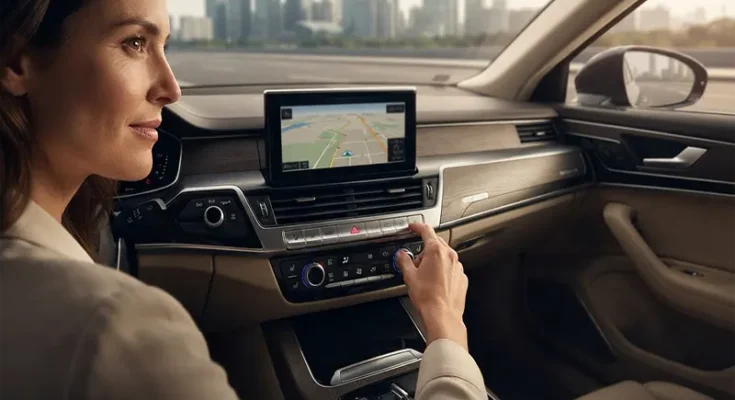
Why Automakers Are Bringing Back Physical Buttons to Car Dashboard Designs

Over the past decade, sliding into the driver’s seat of a newly released vehicle often felt like stepping inside a minimalist sci-fi movie set. Sleek, glass-heavy digital displays replaced traditional dashboards, sweeping away dials, toggles, and switches in favor of expansive touchscreens. Automakers chased the futuristic aesthetics popularized by consumer electronics, cutting production overhead and packaging climate controls, audio adjustments, and vehicle settings into smooth digital menus.

However, the honeymoon phase of digital minimalism has officially ended. Faced with mounting consumer frustration, distracted driving crises, and shifting regulatory frameworks, automakers are actively reversing course. The physical button is making a triumphant return to car interiors, driven by a renewed commitment to safety, tactile ergonomics, and intuitive usability.

The Touchscreen Overload: A Decade of Digital Minimalism

The wholesale digitization of car cabins was born out of a desire to modernize. Influenced by smartphones, manufacturers realized that glass screens could be updated …

Why Automakers Are Bringing Back Physical Buttons to Car Dashboard Designs Read More