
The rapid explosion of e-commerce has fundamentally transformed urban landscapes, bringing with it a compounding crisis of congestion. Anyone living in a modern metropolitan area is familiar with the sight: massive delivery vans double-parked on busy thoroughfares, blocking bike lanes, idling for hours, and creating frustrating traffic bottlenecks. Traditional commercial delivery models, built around oversized vans attempting to navigate narrow downtown streets, are rapidly becoming unsustainable.
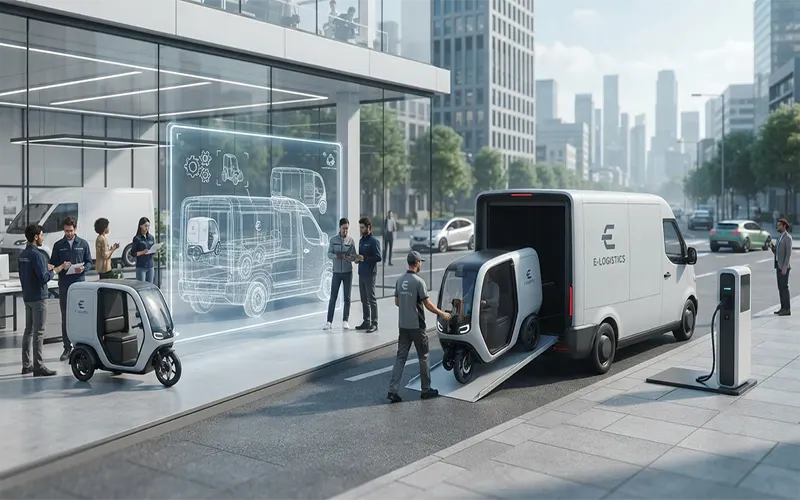
Enter a revolutionary shift in commercial automotive design: electric delivery vans equipped with integrated last-mile micro-mobility pods. By transforming the primary commercial EV into a mobile hub that deploys electric cargo bikes, e-trikes, or autonomous delivery droids, fleet operators are solving urban congestion and slashing delivery times.
The Last-Mile Bottleneck in Modern Logistics
The final leg of a package’s journey—known in the logistics industry as the “last mile”—is notoriously the most expensive, inefficient, and carbon-heavy part of the supply chain.
Traditional urban delivery fleets face severe operational friction points:
- The Parking Nightmare: Commercial drivers waste up to a third of their shift hunting for legal parking spots or racking up costly municipal parking citations.
- Pedestrian and Traffic Deadlocks: Navigating oversized vans through dense pedestrian zones, narrow alleyways, and gridlocked downtown cores slows package drop-off rates to a crawl.
- Idling Emissions: Constant stop-and-go driving in congested traffic spikes local air pollution and drains energy efficiency, even in electric fleets.
Engineering the Mother Ship: Integrated Pod Architecture
To conquer these urban obstacles, cutting-edge commercial vehicle designers are rethinking the van from the ground up, turning the primary electric vehicle into a rolling “mother ship.”
- Onboard Docking and Charging Bays: Modern commercial EV chassis are engineered with integrated rear or belly-mounted docking bays. These compartments securely store, lock, and inductively charge specialized micro-mobility pods while the main van is in transit.
- Automated Launch Ramps: Utilizing hydraulic lifts, slide-out ramps, or automated conveyor systems, the driver can deploy an electric cargo bike or autonomous delivery droid in seconds without heavy manual lifting.
- Navigating Alternative Infrastructure: Once deployed, the micro-mobility pod utilizes bike lanes, pedestrian paths, and tight alleyways—areas strictly off-limits to traditional commercial vans—allowing the operator to execute dozens of close-proximity drop-offs with ease.
Efficiency, Ergonomics, and Fleet Economics
Pairing a high-capacity electric delivery van with nimble last-mile pods unlocks staggering operational advantages:
- Hub-and-Spoke Efficiency: The main electric van parks legally in a designated commercial loading zone once. From that single staging point, the driver or autonomous pods radiate outward to complete multiple deliveries across several surrounding blocks, eliminating the need to move the massive vehicle every few minutes.
- Driver Wellness and Ergonomics: Hauling packages out of a deep cargo hold and walking blocks in heavy traffic causes severe physical fatigue. Nimble e-bikes and cargo pods drastically reduce physical strain on couriers.
- Lower Total Cost of Ownership (TCO): Maximizing package delivery density per route slashes labor overhead, reduces energy consumption, and eliminates parking fines, significantly improving profitability for fleet operators.
Regulatory and Urban Planning Integration
City planners and municipal regulators are welcoming this new breed of commercial vehicle with open arms. Urban centers worldwide are increasingly implementing low-emission zones, pedestrian-only districts, and stricter delivery-truck bans.
Commercial EVs equipped with micro-mobility pods align perfectly with these forward-thinking urban policies. By replacing heavy freight trucks with clean, space-saving delivery alternatives, automakers and logistics firms can work hand-in-hand with city governments to reclaim public spaces from traffic gridlock.
Integrating micro-mobility pods into commercial electric vehicles transforms freight delivery from a clumsy, high-friction bottleneck into a seamless, highly efficient urban ecosystem. As cities grow denser and environmental regulations tighten, these innovative mobile-hub vehicles will undoubtedly become the gold standard of modern last-mile logistics.