Over the past decade, sliding into the driver’s seat of a newly released vehicle often felt like stepping inside a minimalist sci-fi movie set. Sleek, glass-heavy digital displays replaced traditional dashboards, sweeping away dials, toggles, and switches in favor of expansive touchscreens. Automakers chased the futuristic aesthetics popularized by consumer electronics, cutting production overhead and packaging climate controls, audio adjustments, and vehicle settings into smooth digital menus.
However, the honeymoon phase of digital minimalism has officially ended. Faced with mounting consumer frustration, distracted driving crises, and shifting regulatory frameworks, automakers are actively reversing course. The physical button is making a triumphant return to car interiors, driven by a renewed commitment to safety, tactile ergonomics, and intuitive usability.
The Touchscreen Overload: A Decade of Digital Minimalism
The wholesale digitization of car cabins was born out of a desire to modernize. Influenced by smartphones, manufacturers realized that glass screens could be updated via software, reconfigured endlessly, and manufactured with fewer physical components. Consolidating dozens of individual switches into a single central display allowed interior designers to craft clean, uncluttered surfaces that looked incredible on a showroom floor.
Yet, this rapid transition created unforeseen ergonomic pitfalls in the real world:
- Forced Visual Distraction: Unlike a physical switch located by touch, a flat glass screen demands your eyes. Adjusting the cabin temperature or fan speed requires looking away from the road to locate a digital icon.
- Fingerprint Smudges and Glare: High-gloss touchscreens quickly become coated in smudges and struggle with direct sunlight glare, making them frustrating to read and operate on bright afternoons.
- Laggy Software Interfaces: When a central processor freezes or software updates lag, basic cabin controls become entirely unresponsive, leaving drivers stranded without a reliable way to defrost a windshield or adjust airflow.
The Safety Crisis: Distracted Driving and Regulatory Pushback
The push to restore physical controls is no longer just a matter of consumer preference—it has become a critical safety mandate. Transport researchers and safety watchdogs have long warned that burying fundamental controls inside multi-tiered menus severely spikes cognitive and visual load.
This evidence has triggered direct regulatory intervention:
- The Euro NCAP Rule Overhaul: Major safety authorities have updated their vehicle assessment protocols. Under current guidelines, automakers aiming for a top five-star safety rating are penalized if essential vehicle functions rely entirely on touchscreens.
- Mandatory Tactile Controls: To secure maximum safety marks, vehicles must now feature dedicated physical switches for core functions such as turn signals, hazard lights, windshield wipers, the horn, and SOS emergency calls.
Government oversight and consumer safety groups are effectively drawing a hard line, proving that digital novelty cannot override fundamental road safety.
The Psychology of Tactile Feedback: Muscle Memory vs. Glass
Human-Machine Interface (HMI) ergonomics highlight a vital concept that digital-first designers initially overlooked: muscle memory.
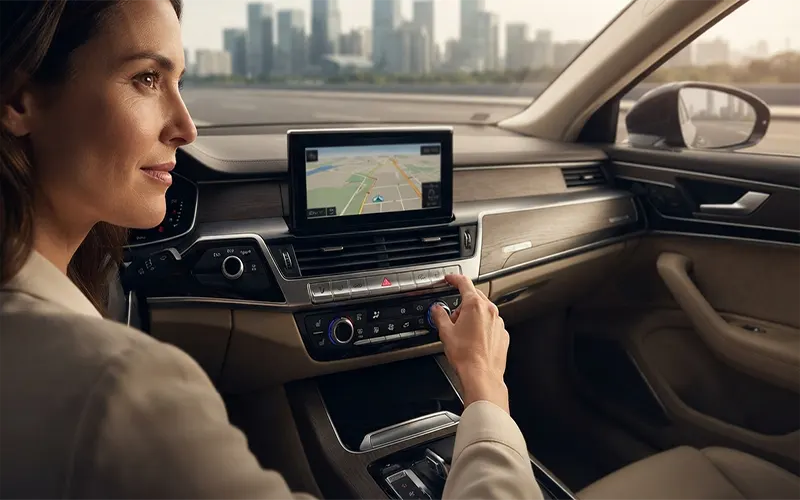
When climate controls or audio volume are governed by physical knobs and raised buttons, human fingers map their location instinctively. A driver can reach out, feel the distinct texture of a dial, click a toggle upward, and adjust the temperature without ever glancing away from the windshield.
Capacitive touch panels and flat glass screens completely strip away this tactile feedback. Because every surface on a smooth screen feels identical, operating it requires absolute visual attention. Returning to physical buttons restores the effortless, eyes-up driving experience that keeps motorists safe.
Striking the Right Balance: The Modern Hybrid Cockpit
Rather than completely abandoning technology, leading-edge automotive designers are pioneering intelligent hybrid cockpits that blend the best of both worlds:
- Large Digital Real Estate: Crisp, expansive touchscreens are reserved for what they do best—detailed GPS navigation, media libraries, and comprehensive vehicle diagnostics.
- Dedicated Tactile Strips: High-frequency, safety-critical core functions—such as climate control temperature rockers, fan speed dials, audio volume knobs, and defroster toggles—are anchored by satisfying, physical switches positioned directly within easy reach.
The return of physical buttons proves that when it comes to vehicle design, intuitive safety and tactile ergonomics will always trump digital novelty. As automakers refine their interior layouts to meet modern safety benchmarks, drivers can look forward to a future where technology serves to simplify the journey rather than distract from it.