
Stepping into a modern automobile increasingly feels less like operating traditional machinery and more like opening a smartphone. Drivers sliding behind the wheel of today’s newest models are often greeted by sprawling digital displays, sophisticated driver-assistance suites, and over-the-air connectivity. However, this high-tech transformation has introduced a surprising twist to the showroom floor: walking out with the keys no longer guarantees full access to all the hardware built into the vehicle.
Driven by the rise of Software-Defined Vehicles (SDVs) and Over-The-Air (OTA) update capabilities, automakers have unlocked an unprecedented degree of remote control over their fleets. While this technology gives manufacturers the flexibility to continuously improve vehicles long after purchase, it has also ushered in a controversial era of subscription-based features, turning standard car functions into recurring monthly fees.
The Architecture of the Software-Defined Vehicle
To understand how feature subscriptions function, one must look at how modern cars are engineered. Traditional vehicles relied on dozens, sometimes hundreds, of fragmented, single-purpose electronic control units (ECUs) wired throughout the body. Modern SDVs consolidate this architecture into centralized domain controllers—powerful onboard computers running unified operating systems that manage everything from braking to cabin comfort.
From a manufacturing standpoint, building vehicles with this centralized software architecture has streamlined factory lines. Rather than managing dozens of complex wiring harnesses and unique hardware configurations for different trim levels, automakers often install physical hardware—such as seat-heating elements, high-performance battery capacities, advanced sensors, and premium audio amplifiers—universally across an entire model lineup during assembly. The physical parts are already inside the car waiting for you; the only thing keeping them turned off is a line of digital code.
The Business Model: Monetizing the Ride After the Sale
The financial motivation driving this shift is clear. For over a century, traditional automotive business models relied almost entirely on a one-time product sale at the dealership, followed by occasional dealership service revenue. By transitioning toward a Software-as-a-Service (SaaS) model, automakers are seeking recurring revenue streams that persist long after the vehicle leaves the lot.
Manufacturers commonly lock various capabilities behind digital paywalls, including:
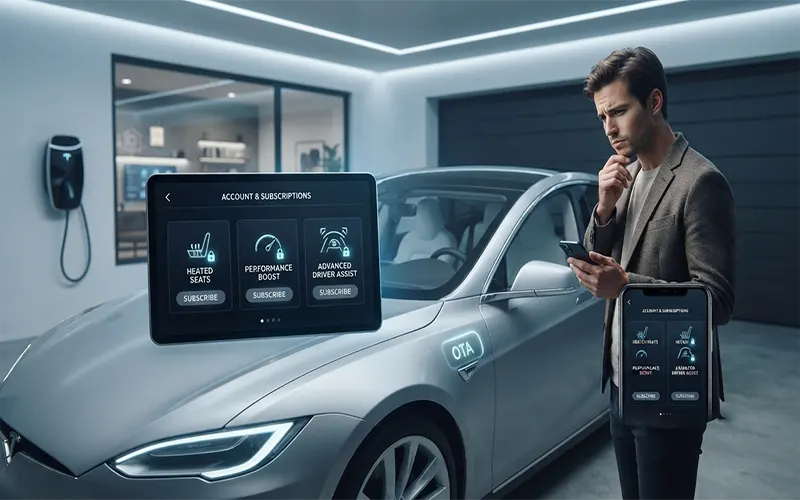
- Advanced Driver-Assistance Systems (ADAS): Semi-autonomous highway driving aids, automated parking features, and lane-change assist functions.
- Convenience and Comfort: Remote engine start, heated steering wheels and seats, and personalized ambient lighting profiles.
- Performance Enhancements: Software-unlocked acceleration boosts, adjustable suspension stiffness, or extended battery range packages.
- Infotainment and Connectivity: Premium streaming applications, live satellite mapping, and advanced Wi-Fi hotspot data packages.
This digital gating strategy also alters vehicle pricing and residual values. In theory, a buyer could purchase a base-spec vehicle at a lower initial sticker price and selectively activate features as needed, though critics argue that pre-installing the hardware ultimately bakes the cost of those unused components into the upfront MSRP anyway.
Consumer Backlash and Industry Friction
The introduction of software paywalls has ignited intense friction between automakers and consumers. The core psychological and financial grievance stems from a sense of paying for hardware twice: once upfront when purchasing or leasing the physical car, and a second time via a monthly or annual subscription simply to use components that are already sitting in the dashboard.
Public pushback has been swift and vocal, prompting legislative scrutiny in various regions. Lawmakers and consumer advocacy groups have begun examining the legal boundaries of digital ownership, right-to-repair laws, and whether locking functional hardware behind software paywalls constitutes unfair consumer practices. Facing this blowback, some manufacturers have scaled back certain hardware subscription trials, shifting instead toward software-exclusive services that require ongoing cloud computing or live data costs.
Finding the Balance: Value-Add Services vs. Nickel-and-Diming
As the automotive market matures, a clearer distinction is emerging between fair software monetization and consumer exploitation:
- Fair Subscription Services: Features that rely on continuous external data feeds, cloud servers, or live third-party services—such as real-time traffic updates, live mapping data, continuous cybersecurity updates, and premium music streaming—align naturally with recurring subscription models.
- Unfair Hardware Lockouts: Conversely, gating static physical components that require no ongoing network overhead, such as basic seat heating or standard horsepower limits, continues to alienate buyers who view it as corporate nickel-and-diming.
Software-defined vehicles represent the undeniable future of transportation, offering unprecedented customization, safety enhancements, and remote diagnostic capabilities. However, as automakers navigate this digital frontier, balancing software monetization with consumer trust is paramount. Sustainable long-term success will require respecting the line between value-added digital services and traditional vehicle ownership to avoid alienating the very drivers keeping them in business.